Watch before you press the shutter
Take a moment to look without photographing. Notice where the animal is facing, how it moves and what happens when it pauses. Having your composition ready makes it easier to respond to a small change. Patience can give you a more expressive photograph than constantly moving in search of another angle.
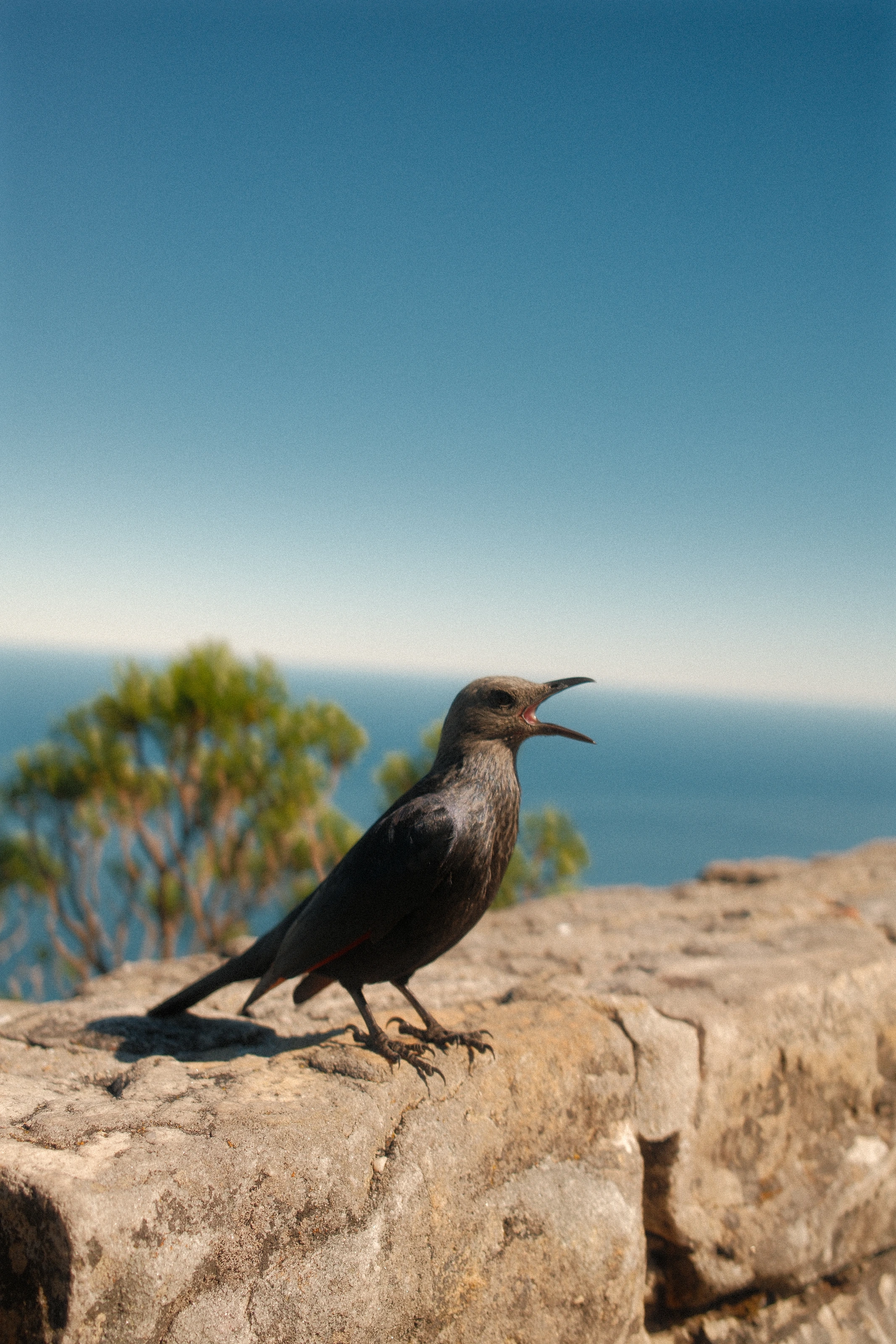
In the bird portrait below, the open beak creates a clear gesture against the sea. You do not need to know what happened before or after that instant to feel its energy. When a moment develops naturally, a short burst can give you a choice of expressions. Review the frames afterwards and choose the one with the clearest shape.
Give focus a clear job
For a close animal portrait, start with the visible eye. A sharp wall or branch can look convincing on a small screen while the face is slightly soft. Check the eye at a useful magnification, then return to the whole photograph to judge the expression and composition together.
Continuous autofocus can help when your subject moves. If your camera offers suitable animal or bird detection, try it, but watch where the focus box actually lands. When it picks the wrong subject, a smaller focus area gives you more control. The aim is to direct attention to the animal, whatever focusing method your camera provides.
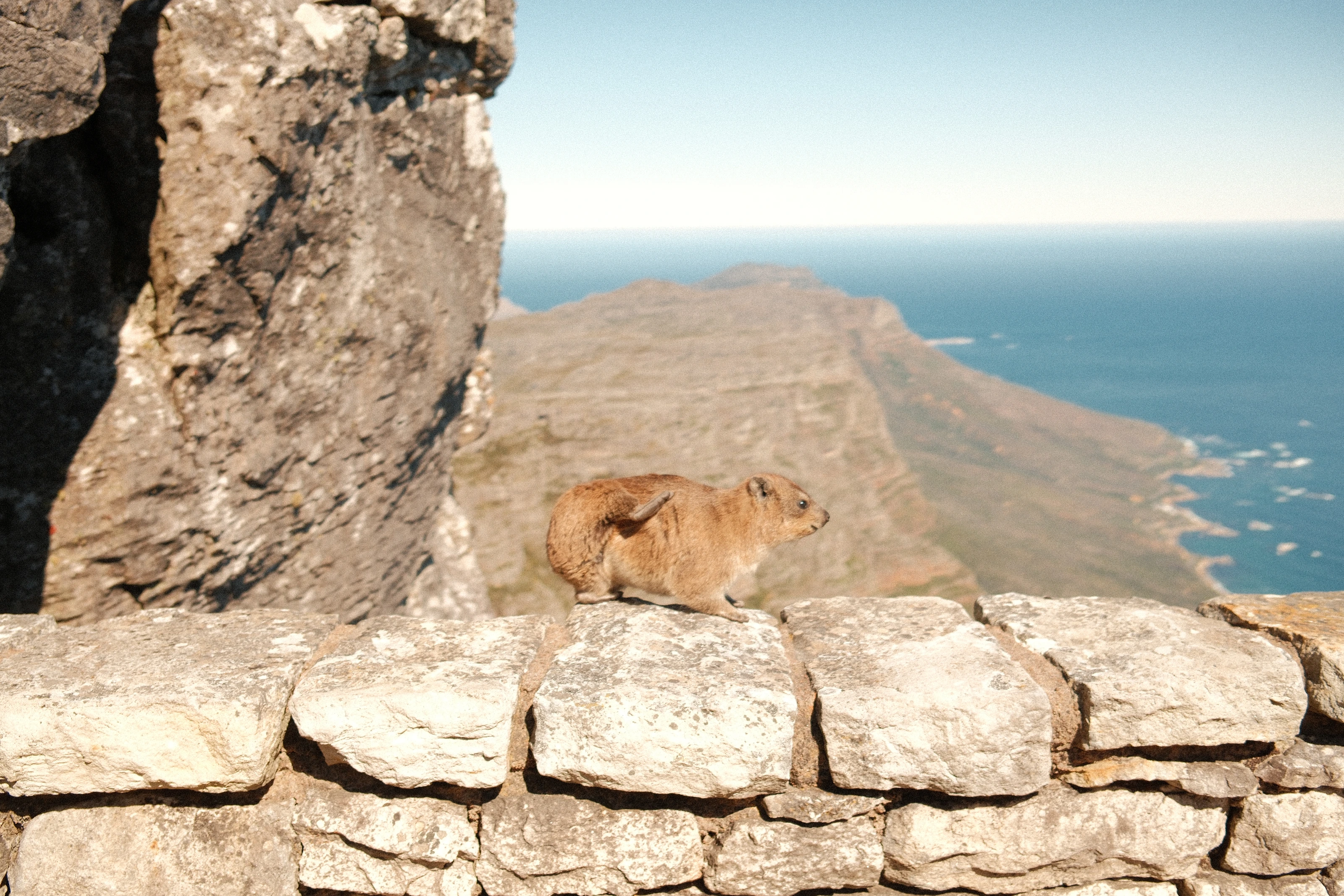
The photograph of the animal on the wall brings its face and fur into a closer view, while the coastline remains visible behind it. That background gives the portrait context without needing to compete for equal attention.
Match the shutter speed to the movement
An animal standing still needs a different approach from one running, shaking or taking flight. Watch the shutter speed as the light changes. If you want to hold movement sharp, a faster shutter speed helps; you may need a wider aperture or higher ISO to maintain the exposure.
There is no single setting that suits every animal. Take a few frames and inspect the result. If the surroundings are sharp but the animal is blurred, subject movement may be the problem. Image stabilisation can reduce camera shake, but it cannot stop the animal moving during the exposure. Choose the setting for the moment in front of you.
Let a small subject belong to a big scene
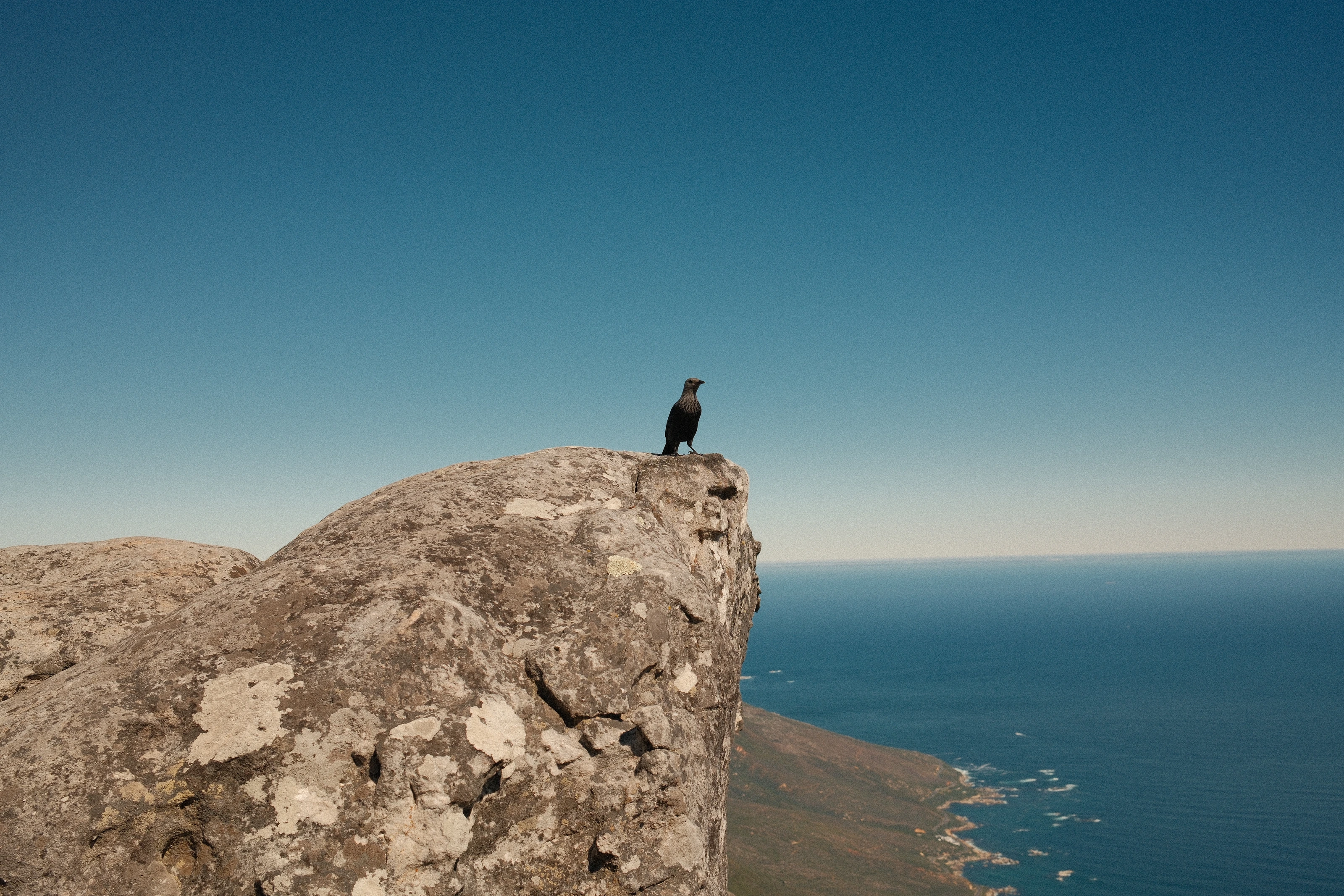
The bird in the opening photograph occupies only a small part of the frame. Its outline is still easy to find because it stands against an uncluttered blue sky. The large rock establishes scale, and the coastline carries the eye into the distance. Making the bird larger would create a different picture, with less of that sense of place.
Try a wide composition as well as a closer one when the opportunity allows. Look for separation around the head and body, and leave space in the direction the animal faces. Empty sky can be useful: it gives a small subject a clear outline and lets the photograph breathe.
Notice the edges as well as the animal
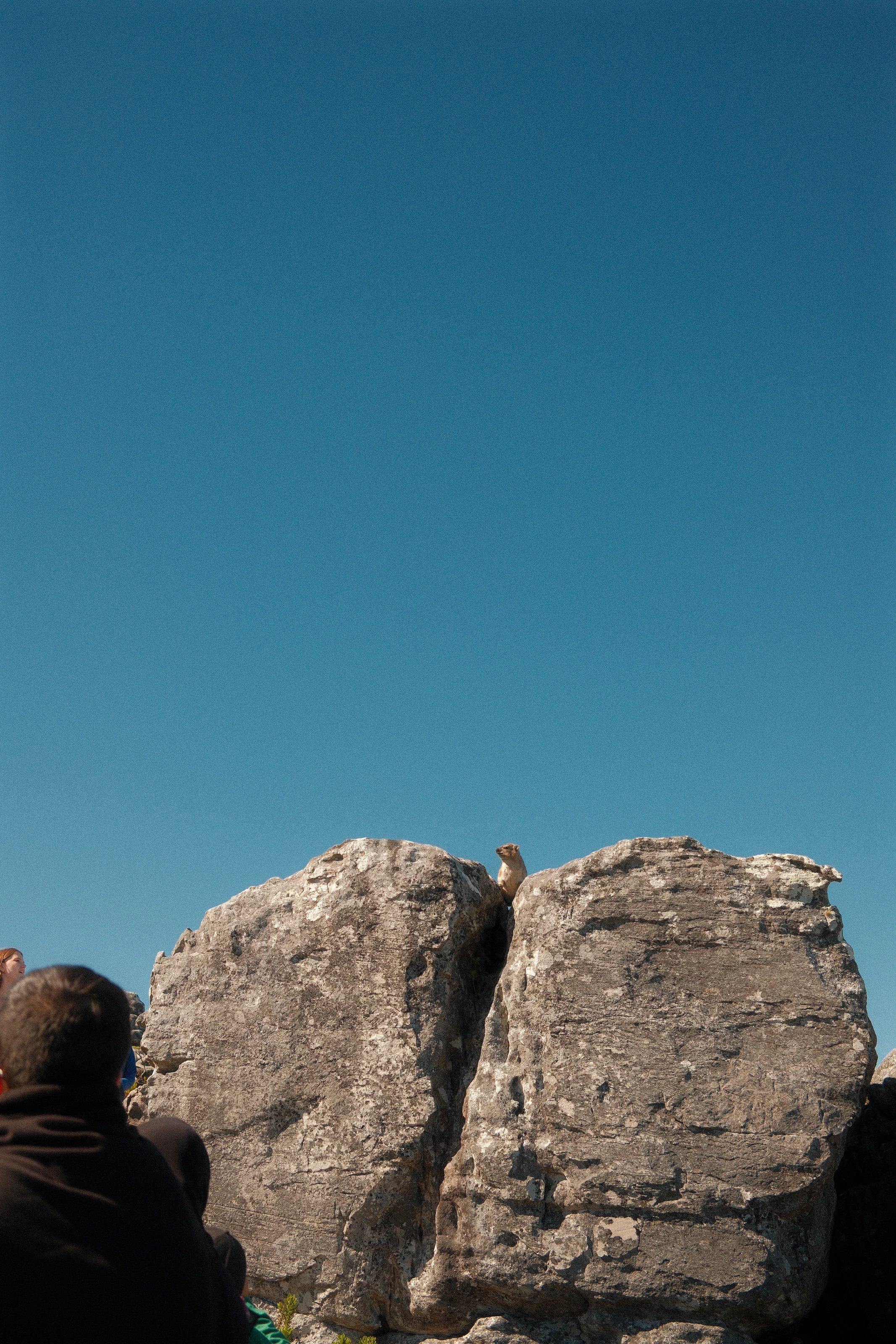
In the vertical photograph below, the animal appears in the gap between two large boulders. The rocks create a natural frame, while the people at the lower left add another layer to the scene. This is a wider observation of an animal sharing a place with visitors.
Before taking your next photograph, look around all four edges. Decide which details support the picture and which draw attention away. A modest change of angle may help, but stay on permitted paths and give the animal space. You can always choose a wider composition instead of trying to move closer.
Leave room for natural behaviour
Keep enough distance for wildlife to continue what it was doing. Avoid chasing, feeding or using calls to provoke a reaction for a photograph. If an animal becomes alert to your presence, moves away or stops feeding, give it more space. A longer lens can help you make a closer composition while keeping your distance.
With a pet, work around its comfort too. Allow pauses, keep sessions short and let its owner help it settle. The most rewarding animal photographs often come from noticing a small, unforced moment: a glance, a stretch or a pause in the landscape. Start with observation, and let the picture follow.
Sources & further reading
References checked on 2026-09-22.