Think about direction, not just the clock
The period of low, warm light around sunrise or sunset varies with season, latitude, weather and the local horizon. A hill or building can block the sun well before the published sunset time. Arrive early enough to find a composition before the light you want reaches the subject.
Front lighting can make colour and detail easy to see. Side lighting often gives stone, grass and ridges more shape. Backlighting may create a silhouette or bright rim, but also increases the exposure difference between sky and foreground. Walk around if access allows and compare these possibilities before settling on a frame.
Give the foreground a reason to be there
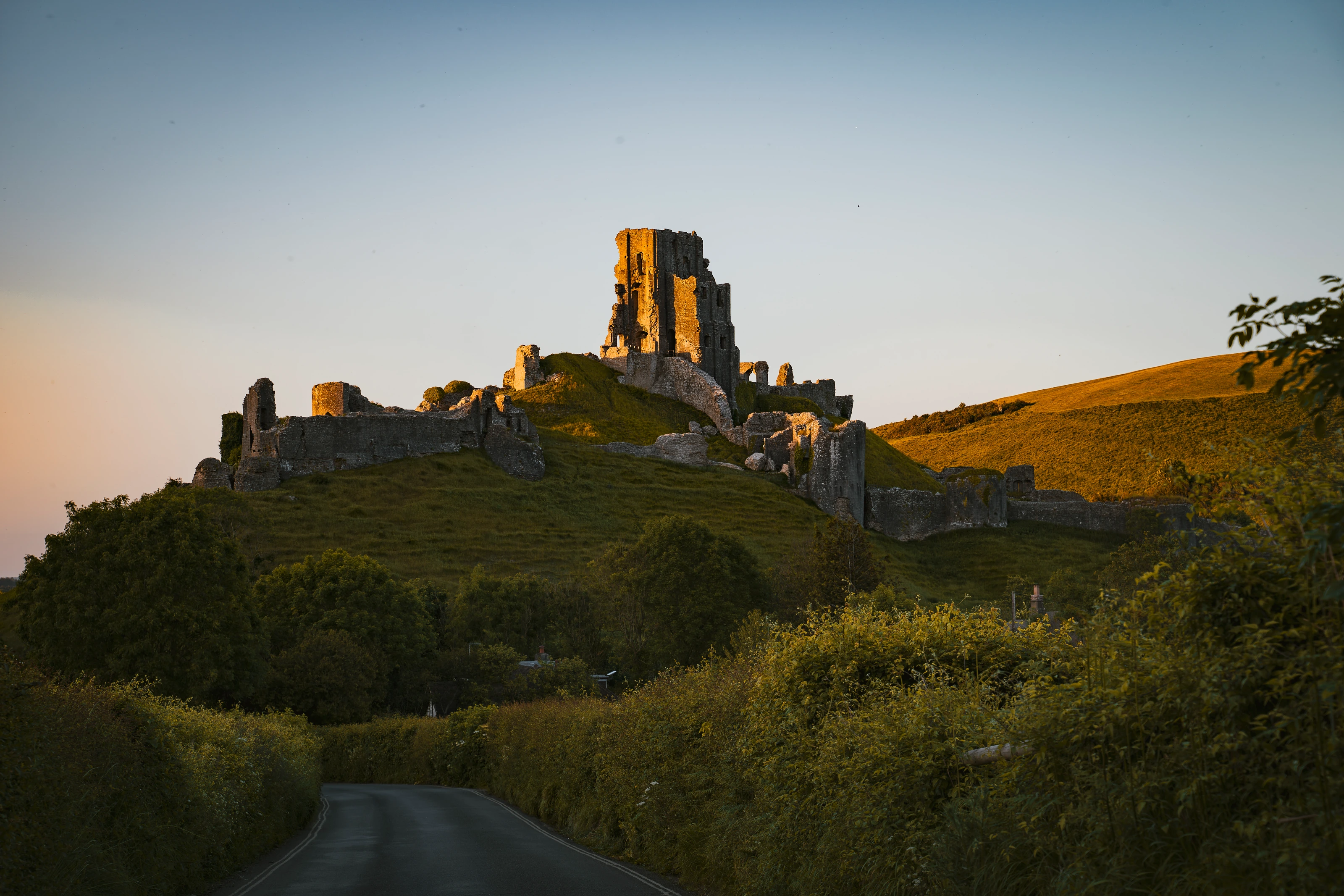
A foreground is useful when it connects the viewer to the main subject. In the castle photograph, the road enters from the bottom of the frame and leads towards the hill. It gives the eye a route without requiring everything to be equally bright.
Avoid filling the bottom of a photograph with an object simply because it is nearby. Look for a curve, a change in texture or a shape that relates to the distance. Check the edges for branches, fence posts and bright distractions, and adjust your viewpoint before relying on a later crop.
Balance the sky and the land
A bright sky above shaded ground can exceed the detail you can retain in one exposure. Check the histogram and highlight warning, especially around the sunlit areas you want to keep. Slightly reducing exposure may protect those highlights, but avoid making the land unnecessarily dark if the sky already holds detail.
For a static scene, exposure bracketing can give you options to blend later. Keep the camera stable and watch for moving leaves, animals or water that may complicate the blend. A graduated filter is another approach in suitable scenes, although an uneven skyline can make its effect harder to place cleanly.
Keep an eye on movement and focus
A modest aperture such as f/8 can be a starting point for a landscape, but depth of field also depends on focal length and focus distance. Focus deliberately on an important part of the scene and check both near and far detail. The smallest aperture is not automatically the sharpest choice.
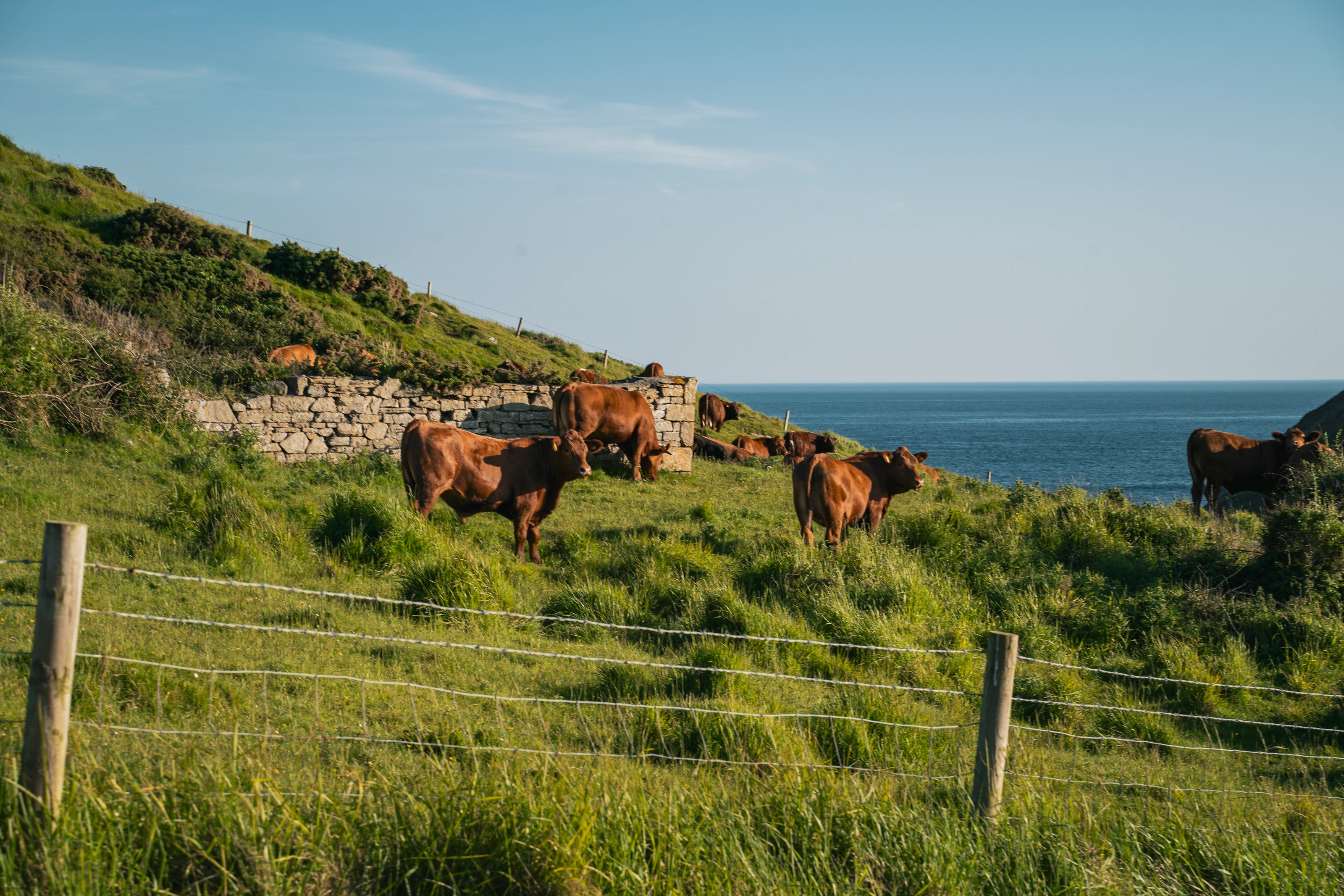
If animals or people are part of the landscape, choose a shutter speed that suits their movement. A tripod supports the camera, not the subject. The coastal cattle below work as subjects within a wider scene: the field, wall and sea explain their surroundings rather than acting as an empty background.
Make a short sequence as the light changes
Try one wide view, one tighter composition and a detail that concentrates on the illuminated texture. Compare the photographs while you are still there. If a shadow is now covering your main subject, a different composition may be more effective than trying to preserve the first idea.
When editing, keep the distinction between warm light and the actual colour of the surfaces. Raising warmth and saturation everywhere can flatten the variation that made the scene interesting. Let some shadows remain cooler or darker, and choose the frame with the clearest structure rather than simply the strongest colour.