Look at the face before the scenery
Before choosing a composition, ask your subject to turn gently towards and away from the light. Watch what happens to the shadows under the eyes, nose and chin. A small change in direction can have more effect than a large change in camera settings.
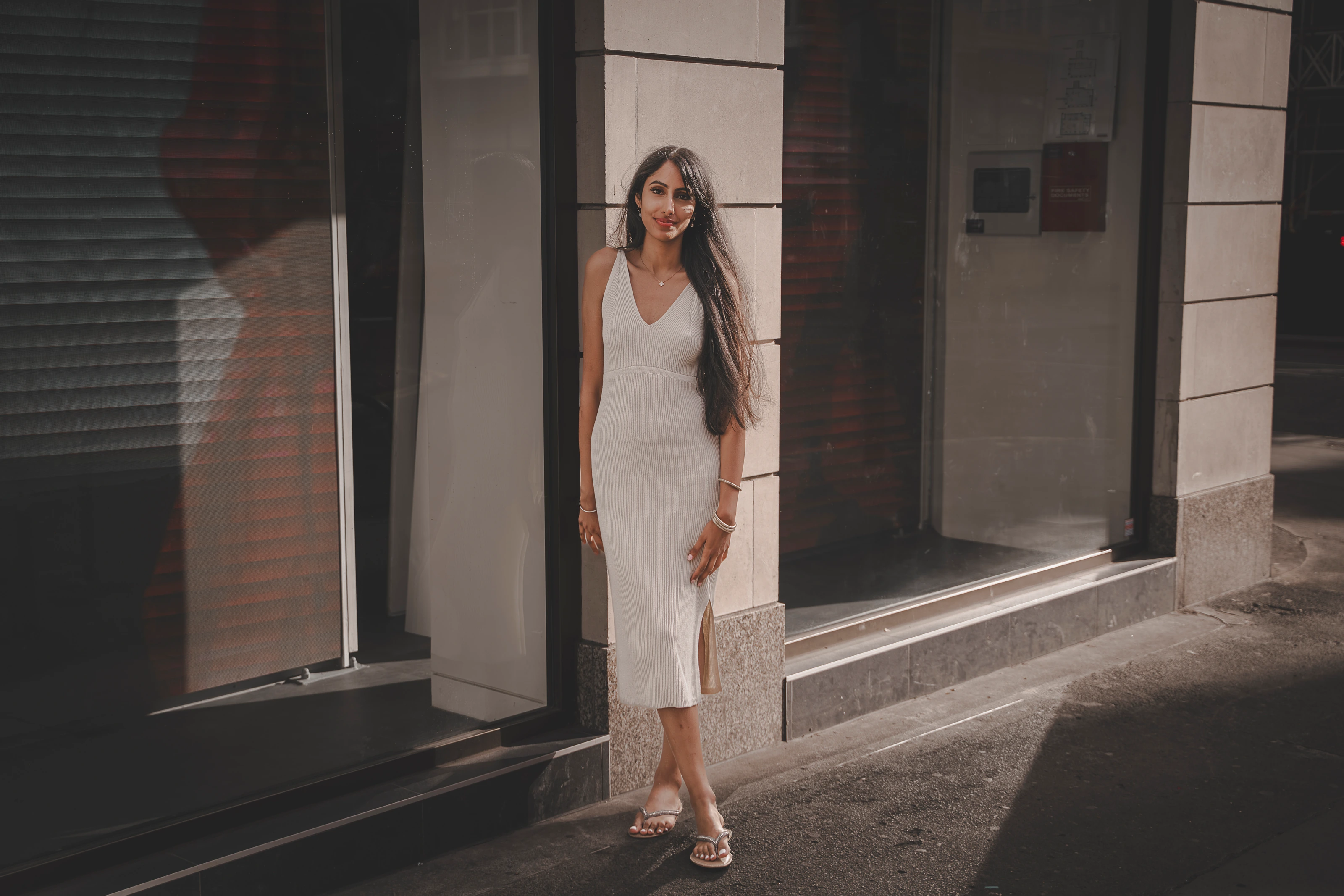
Open shade is a useful starting point: stand your subject out of direct sunlight, with a clear view towards brighter open sky. Avoid placing them deep in a dark doorway while keeping a sunlit background behind them unless you deliberately want that contrast. Check for patches of sunlight across the face and strong colour reflected from nearby walls.
Give the background a job
Decide whether the setting should explain something about the person or simply support them. A wider portrait might include architectural lines, clothing and body language. For a closer picture, a simpler background can keep attention on the expression.
Check the edges of the frame and the area directly behind the head. Bright signs, parked vehicles and a vertical line that appears to grow out of someone’s head can distract from an otherwise strong portrait. Move yourself first: a step sideways or a slightly lower viewpoint may solve the problem without moving your subject far.
Use depth of field deliberately
A wide aperture can help soften a background, but the widest setting is not automatically the best one. At close distances, very shallow depth of field can leave one eye or part of the face soft. Focus on the nearer eye and review a magnified image when you have a moment.
For one mostly still person, f/2.8 to f/4 and around 1/250 second can be starting points to test, not a prescription. Focal length, distance, movement and available light change what works. Use a faster shutter if your subject is moving, and allow ISO to rise when needed rather than accepting avoidable motion blur.
Give small, clear directions
Ask for one adjustment at a time: turn the shoulders slightly, shift weight onto one leg or rest a hand comfortably. Demonstrate if a direction is difficult to describe. A relaxed pose should still feel natural to the person being photographed; there is no single shape everyone needs to copy.
Keep talking between frames and allow pauses. Try a standing portrait, a short walk and a closer composition before changing the location. Small variations often give a more useful selection than holding one complicated pose for several minutes. Check clothing and stray objects, but ask before adjusting anything on the person.
Plan for the photographs you will use
Leave room around the subject if the photograph may need to work as both a website banner and a vertical social post. Make a few frames looking away from the camera as well as directly towards it, and check whether hands and feet are intentionally included or deliberately cropped.
Before a portrait session, share the mood, clothing ideas and intended use with your photographer. For a London outdoor shoot, discuss a quieter meeting point and an alternative if the weather changes. A clear plan helps the session feel relaxed while still producing photographs that fit their purpose.