Begin with the moments that cannot move
List the ceremony, meal, speeches, entrances and any religious or cultural elements with a fixed time. Include travel between locations, access restrictions and the point at which the room needs to be ready for guests. These are the anchors; portrait sessions need to fit around them.
If preparations happen at two locations, tell your photographer early. Travel time and simultaneous events affect whether a second photographer is helpful. A plan that looks spacious on paper can become tight once parking, lifts and venue access are included.
Choose a short, named family-photo list
Write the essential combinations using people’s names. ‘Both sets of parents with the couple’ is easier to organise when a trusted relative knows exactly who needs to be called. Ask that person to help gather the next group while the current one is being photographed.
Start with guests who may find standing or waiting difficult. Agree a nearby, accessible location and a wet-weather alternative. Long lists can consume the time you hoped to spend talking to people, so separate essential groups from photographs that can happen more naturally later.
Give couple portraits a purpose
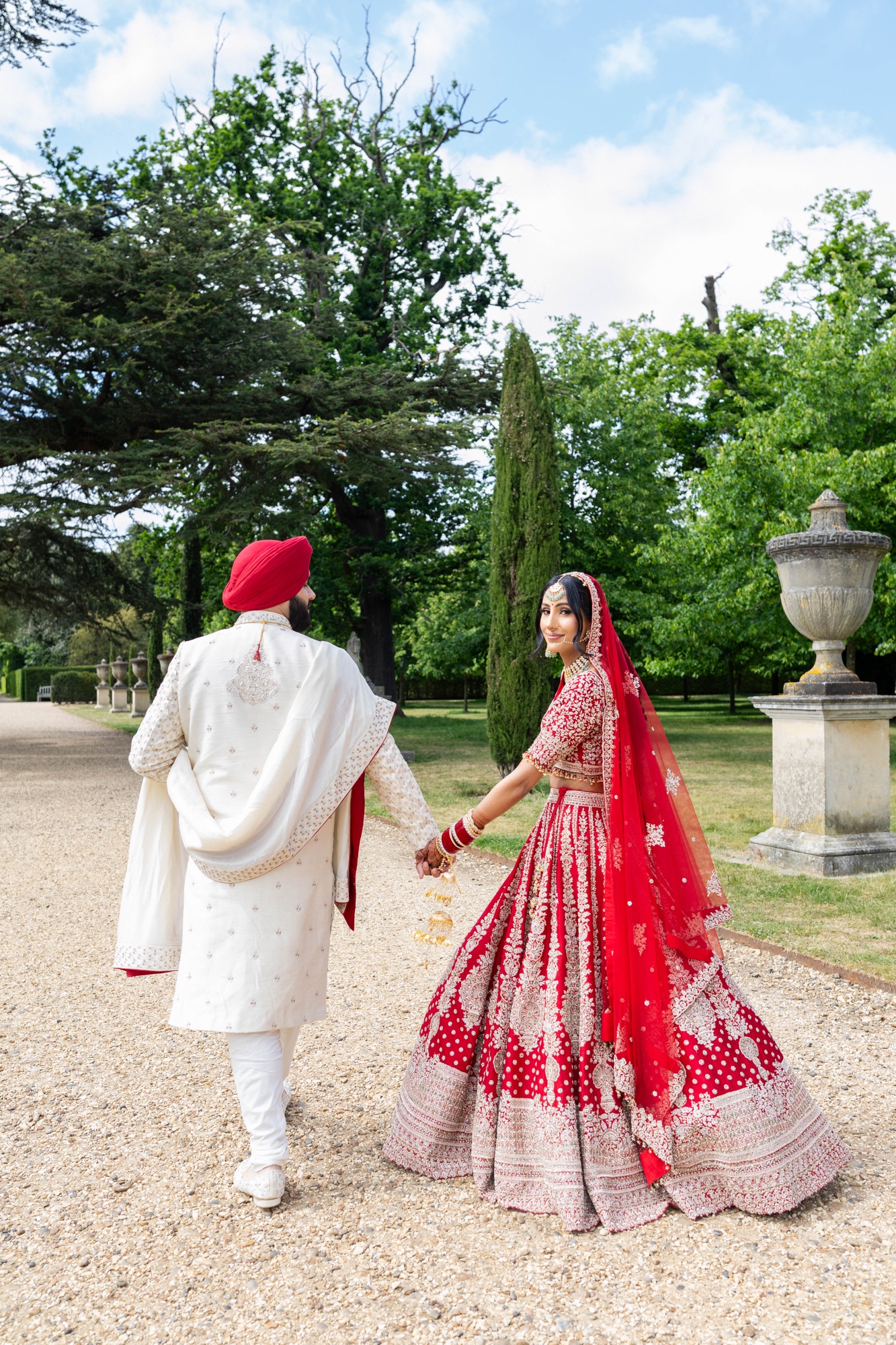
Think about the mood you want: a quiet walk, architectural portraits, colourful gardens or a few minutes away from the crowd. Share references as a way to describe feeling and composition, rather than expecting another couple’s light or location to be reproduced exactly.
A short portrait session earlier in the day and another near better evening light may be easier to enjoy than one long session. That only works when travel, weather and the actual sunset time make it practical. Your photographer can help find an alternative if the schedule or sky changes.
Build in breathing room
Clothing adjustments, conversations and a room change all take time. Add a realistic buffer to the parts of the day most likely to overrun, especially travel and large groups. Avoid solving every delay by removing the only time you have set aside for portraits.
Tell suppliers which moments are especially important and give one person responsibility for communicating changes. Your photographer should not have to discover a moved speech by hearing it begin from another room.
Send these details before the day
An organised briefing means less organising while you are celebrating.
- Venue addresses, timings and the name of the day’s main contact.
- The essential family combinations and someone who can gather people.
- Any photography restrictions during the ceremony.
- Accessibility needs and a usable wet-weather location.
- Personal details, traditions or guests you especially want remembered.
Planning your photographs with Clickography
Clickography offers wedding-day coverage and separate couple sessions, with digital photography and suitable professional film options. Share your date, venues and priorities through the enquiry page so the coverage can be planned around your celebration.